Puzzles
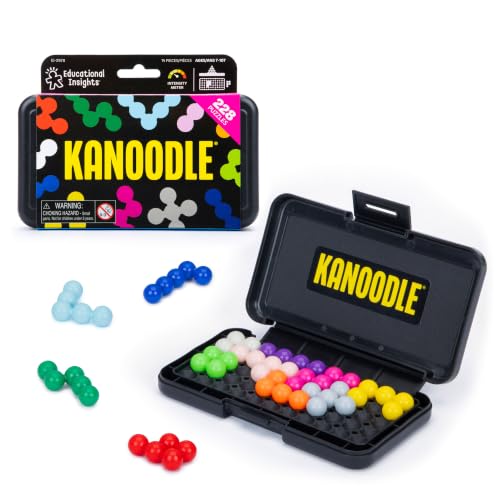
1.Educational Insights Kanoodle 3D Puzzle Game
Hundreds of spatial puzzle challenges build problem-solving and logic skills, and it's compact enough for car rides.
The best educational gifts teach without feeling like homework. Kids learn most when they're hands-on and a little challenged, whether that means building, sorting, reading, experimenting, or solving puzzles. Choose something just past what the child can do now, so it feels like a win, and look for items that can be used again at a higher level.
Updated October 26, 2026 · Picks refresh weekly from what's selling now
As an Amazon Associate, Bday Reg earns from qualifying purchases.
Hundreds of spatial puzzle challenges build problem-solving and logic skills, and it's compact enough for car rides.

Kids build marble tracks to solve progressively harder challenges, learning planning and spatial reasoning.

Prepared slides and rock specimens let curious kids explore the tiny world up close with an easy-to-use microscope.

Focus-free binoculars sized for small hands encourage young explorers to watch birds and bugs outdoors.

A beginner science kit with hands-on experiments that introduces young kids to STEM concepts at home.

Simple decodable phonics stories help new readers build confidence as they sound out their first words.

Answers kids' endless questions about animals, space and the world with bright photos and simple explanations.

Five classic rhyming Seuss stories make early reading playful, whether read aloud or independently.

Sliding-car challenges from beginner to expert teach step-by-step planning and reasoning in a solo game.

A mystery storyline with 150+ logic puzzles keeps older kids solving codes and clues for hours.

Funny, relatable chapter books are a great step up for newly confident readers building a reading habit.

A compact 60-challenge logic puzzle that teaches sequential thinking and is easy to take anywhere.
Good picks include beginner reading books, counting and matching games, simple building sets, and kid-safe science kits. At five, children love hands-on activities with clear results. Look for items with big pieces and short instructions so they can work with minimal help.
Hands-on, open-ended play supports skills like problem-solving, language, and fine motor control, and children tend to stick with activities they enjoy. A gift works best when it fits the child's age and interests and an adult occasionally joins in. No single item replaces reading together and everyday conversation.
Start with what the child already likes, then choose an educational angle on it, like a dinosaur book or a rocket-building kit. Check the age range, make sure it is not too hard, and pick something with replay value so it stays interesting after the first day.